Teacher etiketine sahip kayıtlar gösteriliyor. Tüm kayıtları göster

21 Ocak 2016 Perşembe

What Worked Well Wednesday: Successful Parent Teacher Conferences


 Oh, parent teacher conference time! Just thinking about them has always made me feel like...


Some are parents you've never met before. Some you've interacted with for years. Some will be incredibly protective and have their defenses up. You will have to have some difficult conversations about the most important people in their world. This is scary for all involved.

But over the last year or so, I've found ways to make conferences run smoothly and successfully for all involved. Today is our fall conference day, and I am using some of the things that have made conferences successful for me in the past.

Just like we spend time setting up our room for seamless learning for our students, put in a little time to set up for your parents.

The environment sets the stage, so make sure it is pleasant. I put on some soft classical music and ensure that the room is tidy and smells good. These little things can make a big impression. I swear by fragrance plug-ins. These Air Wick plug-ins are inexpensive and permeate throughput the room (a huge room I might add). When you walk in and notice that it smells great, you are already at ease.

I always set up a table and chairs outside my room for those who are waiting for the previous conference to end. On the table, I put some of our class books for students to read to their parents, and give them  a sense of what their kids can do. Our class books about our field trips (which include pictures and students writing about their experiences) are always a big hit.


When you walk in, I have a sign in table. I use picture frames from the Dollar Tree for the signs- it looks nicer and keeps the signs in good condition so they can be used again.


At each child's spot, I have a pile of all of their papers that I will go over with parents. It is easy for me to grab when they get there, and helps me make sure that everyone has a copy of everything. There are always a few parents who can't make it, and now I have everything ready for when I can meet with them. There are always several notes to go home, as well as student journals and portfolios. Our district kindergarten "report cards" are very basic, so I supplement with parent reports from ESGI and a talking points sheet.

I love this format because it reminds me of all the positives. When I sit down to fill them out, I think about what I've seen each child improve in, what they are really strong in, and what they struggle with. I leave the "goals" section blank and fill this out with parents. I love hearing what they want to see for their child, and what they are willing to put into this.  This helps solidify that we are a team, and helps us focus on what we want for that child.These talking points help me stay focused  as we confer. 

 Before leaving, I have a little treat for the families who came. Who doesn't love a little something sweet?


Doing these things has allowed me to make conferences seamless and productive. Going into it today, I feel at ease and well-prepared, excited to see parents beam when I tell them the great things their kid can do. Do you have any "must-do's" for conferences? I'd love to hear about them!


What's going well in your classroom? Link up and share with us!

An InLinkz Link-up

14 Ocak 2016 Perşembe

Feature Friday: Danielle from Carolina Teacher

Happy Friday, Kinder Tribe! It's time for another Feature Friday! Every Friday we will feature a member of the Kinder Tribe who will be sharing their expertise with us!


This week's awesomeness comes from Danielle from Carolina Teacher! She has some really excellent tips for reaching your ELL students! Take it away, Danielle!


Hey Kinder Tribe!  I'm Danielle from Carolina Teacher, and I am so excited to be a guest blogger today for Feature Friday.

Like many of you, I'm sure, I have a large population of Spanish speaking students in my classroom.  Last year, I was a part of an amazing professional development on working with Latino English Language Learners.

So I wanted to share a few strategies with you for how I work with the ELLs in my classroom.  (I will talk mainly about Spanish since that is what I have the most experience with, but many of these strategies work for ELLs with other backgrounds as well.)

Did you know that ELLs will understand English better if they continue to develop their home language, too?  Unfortunately, when children enter school, they often feel like their home language is less valued and they don't like to speak it.  I've heard stories from parents of older children whose kids won't even speak in Spanish to them at home.

A few ways you can honor their home language:

  • Allow them to speak their home language when they are speaking to their friends.  If possible, I like to sit at least two Spanish speakers together, so they have the opportunity to speak Spanish whenever they want or need to.
  • Learn about holidays, foods, and traditions from their culture.  Ask the children and families to share about their experiences.
  • Read books with Spanish words.  Allow your Spanish-speakers to be the experts, and teach new words to the class, as you read.
There are tons of books that include Spanish words.  Here are a few of my favorites...
Dear Primo has two cousins writing back and forth to one another.  One lives in the US in a city, and the other lives in rural Mexico.  It's great for teaching letter writing, compare and contrast, or just a fun read aloud.

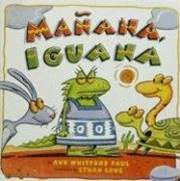
Manana Iguana is a twist on the Little Red Hen story.  It's great for a fractured fairy tales unit!

Martina the Beautiful Cockroach is a super sweet folktale from Cuba.  It would also be great to include when teaching fairytales and folktales.  It is also one of my favorite read alouds.  I love the pictures!


This one is a little bit trickier, and can be dependent on the resources at your school.  I know a little Spanish, but not enough to feel confident in speaking with families.  However, there are lots of creative ways you can keep families informed and communication open.

Last year, I started using Google Translate for everything I sent home.  Although nothing is perfect, I checked with a few Spanish-speaking colleagues and they said this was a fairly good translation program.  Every time I wrote a newsletter, permission slip, or invitation, I copied the text and put it through Google Translate.  I always included a disclaimer at the top that said something like: "This was translated by a computer program.  I apologize for any errors."  Then, I copied everything with English on one side and Spanish on the other.  I was amazed at how this small action made a huge impact on family engagement.

I also try to have a Spanish-English interpreter available at class events.  Like I said, this can be difficult if your school does not offer an interpreter, but I wanted to share one strategy I used last year.  I contacted the ESL teacher at the local high school and asked if any Spanish speakers would be willing to volunteer as interpreter at our Open House and Curriculum nights.  This of course would not work for any conversations where you're talking about confidential topics, but can be super helpful at the class or school wide events.

The Frayer Model is a great way to develop vocabulary and language.  It is a graphic organizer that includes a child-friendly definition, a picture, examples and non-examples.

You introduce the word and develop each part of the graphic organizer together as a class.  There are lots of ways to adapt it to make it work best for your class.  Here's one we did last fall.  To help students get started on the concept of examples and non-examples, I had several pictures for them to sort.
You can also have students draw a picture, and then generate examples using their picture.  For Winter, we also did a Frayer model.  For that one, the kids drew and wrote a page to show an example and a separate page for non-example.  I'm so sad I can't find the pictures I took of their finished products!  It was a great way to tell who understood...they drew snow, ice, etc. for the example picture and summer, spring and fall pictures for the non-example.  Then, we made lists for the graphic organizer based on the picture.

I hope this gave you some new ideas for working with the English Language Learners in your classroom!  Thanks for reading.

Feature Friday: Allie from The Positive Teacher

Hi Kinder Tribe Friends! It's Friday which means that it is time for another Feature Friday! Every Friday we will be featuring a member of the Kinder Tribe and they will be sharing their expertise with us!
I am so excited to introduce you to Allie from The Positive Teacher! She just moved to the area that I live in and so I am so excited to become real life friends soon! Take it away Allie! 


Hello Kinder Tribe!  I'm Allie and I blog at The Positive Teacher.   I am so excited to be the Feature Friday to share about new beginnings and how to be a connected educator.

As we are preparing for back to school, many of us are changing roles.  Some of us might be in a different district, school, grade level, or position.  This year I am moving from Ohio to North Carolina to teach full day Kindergarten.  I spent the past 2 years teaching in my hometown, but am so excited for a new chapter in my teaching career.

ATTITUDE


Whether you are facing change by choice or not, embrace it.  Sometimes change can lead to something unexpectedly great.  There are many times where things did not work out how I expected, but it turned out to be a fantastic experience.  The most important aspect of any change in your career is to be there for your students.  They need you at your best!  A positive attitude goes a long way.

COLLABORATING

I love collaborating and learning from others.  When teachers work together, it benefits the students.  If you are a new staff member, make the effort to get to know your team and other staff members.  I am looking forward to meeting my team and assistant.  

CONNECTED EDUCATOR 

                                                    
 For educators in any role.  We blog monthly and comment on each other's posts.  Each tribe member has various experiences, which is great when seeking feedback.
    
For North and South Carolina teachers.  Looking forward to meeting more teachers in my geographical area.  It is important to me that I connect with my community.
For Kindergarten Teachers. 

Other ways to connect with educators online:
-Teacher blogs
-Twitter
-Instagram
-Periscope
-Facebook groups

Enjoy your weekend!